
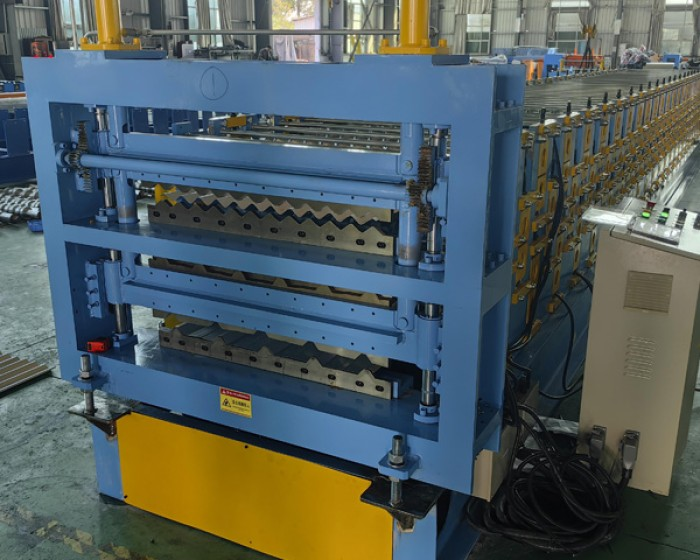
Purlin production technology has advanced significantly over the years, enabling manufacturers to produce stronger, more accurate, and more consistent steel components for modern construction projects. As the demand for efficient building solutions continues to grow, manufacturers have adopted advanced roll forming technology, automation, and precision engineering to improve productivity and product quality. These developments have transformed the manufacturing process, making purlin production faster, more reliable, and more cost-effective. By working with experienced roll forming machine suppliers and investing in a roofing sheet roll forming machine, manufacturers can produce high-quality steel products that meet the evolving needs of the construction industry.
The Evolution of Purlin Manufacturing
Traditional purlin production relied on manual operations and basic machinery, which often resulted in slower production and inconsistent product quality. With the introduction of automated roll forming systems, manufacturers can now produce steel purlins with greater precision and higher efficiency.
Modern manufacturing technology combines computerized controls, continuous production, and precision forming to improve every stage of the production process.
How Purlin Production Technology Has Improved
Automated Manufacturing
Modern production lines automate feeding, roll forming, cutting, and material handling processes. Automation improves production speed while reducing manual labor and production errors.
Higher Manufacturing Accuracy
Advanced roll forming equipment produces purlins with consistent dimensions and precise profiles. Accurate components improve installation efficiency and structural performance.
Increased Production Capacity
Continuous production systems enable manufacturers to produce large quantities of purlins within shorter production cycles, helping meet growing market demand.
Better Material Utilization
Modern feeding and cutting technologies maximize raw material usage, reducing production waste and lowering manufacturing costs.
Reliable Product Consistency
Computer-controlled manufacturing systems maintain stable production conditions, ensuring every purlin meets strict quality standards throughout the production process.
Applications of Modern Purlin Production
Modern purlin production technology is widely used to manufacture structural components for warehouses, factories, commercial buildings, agricultural facilities, logistics centers, industrial plants, modular buildings, storage facilities, infrastructure projects, and other steel construction applications.
Benefits of Advanced Purlin Production Technology
- Higher production efficiency
- Improved manufacturing accuracy
- Consistent product quality
- Reduced material waste
- Lower operating costs
- Greater production flexibility
- Reliable long-term performance
Choosing Advanced Manufacturing Equipment
Manufacturers should evaluate automation capabilities, production capacity, machine durability, maintenance requirements, and technical support before investing in new machinery. Reliable equipment improves operational efficiency while supporting long-term manufacturing growth.
Modern production systems also provide the flexibility needed to manufacture different purlin profiles for a variety of construction projects.
Conclusion
Purlin production technology has evolved through automation, precision engineering, and continuous manufacturing, allowing businesses to improve efficiency, enhance product quality, and reduce production costs. These advancements continue to support the growing demand for reliable steel components in modern construction.
By partnering with trusted roll forming machine suppliers and investing in a roofing sheet roll forming machine, manufacturers can strengthen production capabilities, improve operational performance, and deliver high-quality steel products that support the future of steel construction.